Flight Training – How to Become a Pilot Step by Step
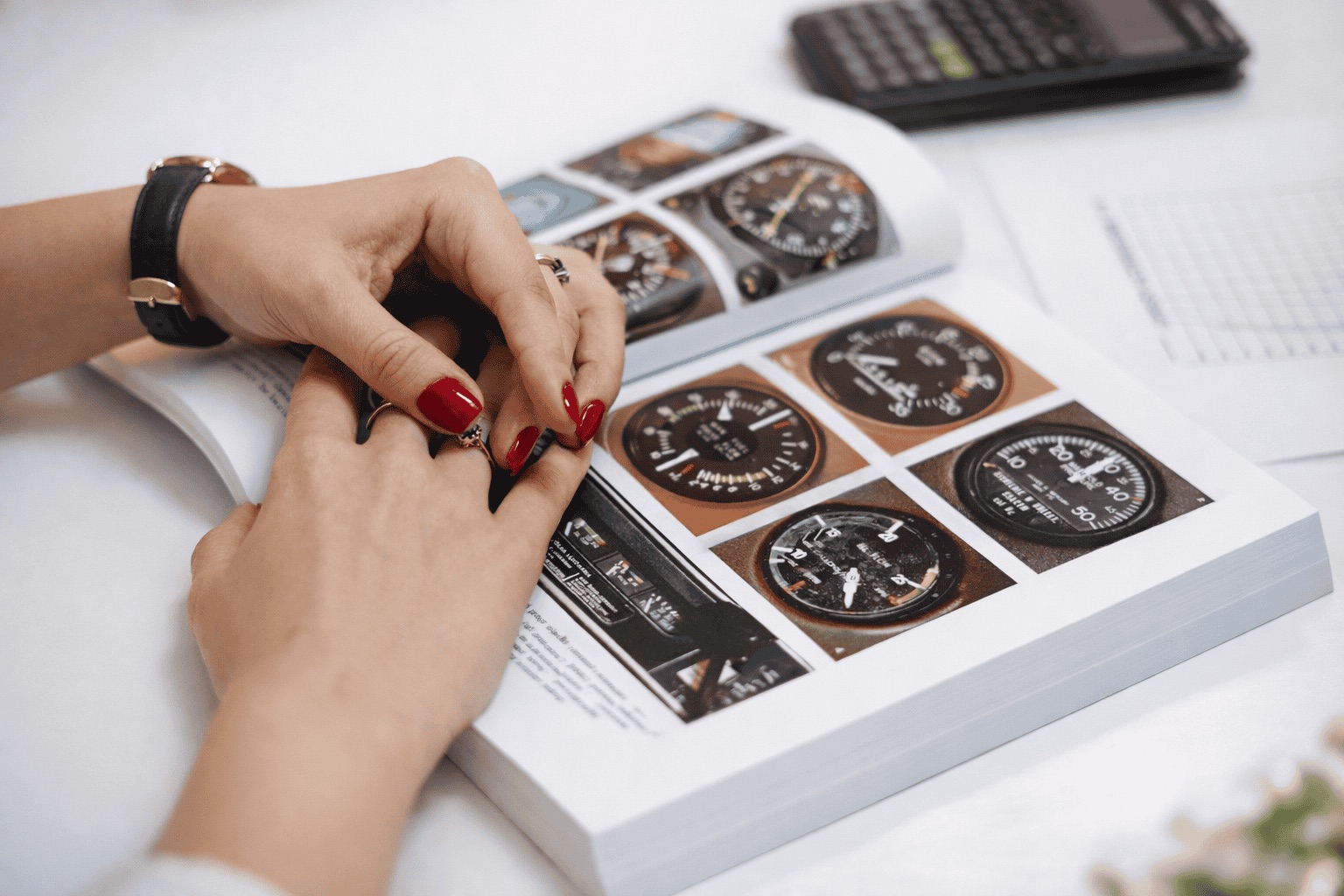
Many people dream of becoming an aircraft pilot from an early age. Most often, these dreams remain just that – dreams – as people pursue other paths, believing that becoming a pilot is too complex and practically out of reach. Nothing could be further from the truth. Below, we explain step by step what the training pathway looks like, how long it takes, and how much it costs. It is also worth remembering that, depending on your needs, time, and financial situation, you do not need to pursue a Commercial Pilot Licence CPL(A) straight away – you can instead opt for Private Pilot Licence PPL(A) training and enjoy leisure flights with family and friends.
What are the basic requirements to start flight training?
The requirements differ in certain respects depending on the type of training undertaken; however, some apply at every stage. These include, above all:
- being at least 16 years of age at the start of training,
- being at least 17 years of age when applying for a PPL(A) licence, and at least 18 for a CPL(A) licence,
- a basic knowledge of English in the case of a PPL(A) licence,
- holding a valid aviation medical certificate of at least Class 2.
Private Pilot Licence PPL(A) training
If flying is your dream and your passion, the Private Pilot Licence PPL(A) is the first step on your aviation journey. Interestingly, although it is the first licence you obtain, it is in many ways the most important and fundamental to your future. It is at this stage that the foundations of aviation knowledge – both theoretical and practical – are built. Furthermore, without a PPL(A), it is not possible to pursue further challenges or obtain additional aviation ratings.
What should you know before starting training?
As already mentioned, obtaining a Private Pilot Licence PPL(A) is the first and most important step in an aviation career. It is also the stage that instils the correct habits and behaviours that will carry through to all subsequent licences and ratings.
To begin PPL(A) aeroplane training, several essential requirements must be met. These include, above all:
- being at least 16 years of age and holding written consent from a parent or legal guardian,
- holding a valid Class 2 aviation medical certificate issued by a certified aeromedical centre,
- having at least lower secondary education or equivalent.
PPL(A) training itself consists of two main parts. The first is the theoretical part, which covers subjects such as:
- Air Law,
- Navigation,
- Operational Procedures,
- Principles of Flight,
- Communications,
- Flight Performance and Planning,
- General Aircraft Knowledge,
- Meteorology,
- Human Performance and Limitations.
One of the advantages of training at a flight school is that attendance at all in-person classes is not mandatory. Candidates who, for various reasons, cannot attend classroom-based sessions may enrol in a modular course delivered through our proprietary e-learning platform, where the majority of theoretical training takes place remotely. That said, theory alone – as in any field – is not sufficient. After completing the theoretical course and passing the internal examination in each subject, candidates proceed to the second part of the course: practical flight training. This is typically conducted on a two-seat Cessna 152 or a four-seat Piper PA-28 Archer III. A minimum of 45 flight hours must be completed during this phase, including approximately 11 hours of supervised solo flight.
Night VFR Rating Training
For holders of a Private Pilot Licence PPL(A) who wish to continue developing their aviation skills, one of the next steps is completing Night VFR (NVFR) training. This course is not particularly time-consuming: it typically consists of a one-day theoretical module followed by practical training comprising a minimum of 5 hours of night flights with an instructor, as well as solo circuits under their supervision. Training at Smart Aero Flight Academy takes place at the professionally lit, controlled airport in Modlin, ensuring that flights are conducted safely while also offering a truly memorable experience.
Multi-Engine Piston Rating MEP(L) Training
Having obtained a PPL(A) and Night VFR rating, the next stage is transitioning to multi-engine aircraft. Two engines primarily offer increased safety in flight; however, it should be noted that operating such an aircraft is considerably more demanding. MEP(L) training at Smart Aero Flight Academy is therefore conducted exclusively under the supervision of highly experienced and qualified instructors, who will guide you through the characteristics and handling of multi-engine aircraft.
MEP(L) training is one of the components required for a full CPL(A) licence, which will be discussed later in this article. In accordance with regulatory requirements, it consists of 7–10 hours of theoretical instruction and a minimum of 6 hours of practical training on a Piper PA-30 Twin Comanche.
What are the requirements to start MEP(L) training?
As with previous courses, a number of initial requirements must be met before commencing MEP(L) training. These are:
- holding a CPL(A) licence, or a PPL(A) licence with a minimum of 70 hours as Pilot-in-Command (PIC),
- holding a Class 1 or Class 2 aviation medical certificate.
MEP(L) training consists of both theoretical and practical elements. The theoretical part comprises 7–10 hours of classroom instruction at the flight school, while the practical part consists of 6 hours of flight training with an instructor on a Piper PA-30 Twin Comanche. The training programme includes elements such as:
- circuit flights,
- area navigation flights,
- circuit training – take-off and landing practice on a complex twin-engine aircraft,
- flight with asymmetric thrust,
- engine failure procedures,
- aircraft handling techniques under asymmetric thrust conditions.
This course provides extensive practical experience, including controlled exposure to simulated emergency situations. Completing it is a gateway to operating multi-engine aircraft, which offer the highest level of flight safety. Such aircraft are also significantly faster and capable of covering much greater distances without refuelling. For those looking to progress further and pursue a career as an airline pilot, the MEP(L) rating is an essential part of that path.
Airline Transport Pilot Licence ATPL(A) Training
The ATPL(A) is the key licence that enables the transition from light aircraft to larger passenger or cargo aircraft – and ultimately to earning a living from flying. It is therefore the next, and most often the final, major milestone on the path to becoming an airline pilot. This training is recommended primarily for those who wish to acquire new skills, begin flying professionally, and build on their existing competencies.
What are the requirements to start ATPL(A) training?
The requirements for the ATPL(A) licence are somewhat higher than those for the PPL(A). The course is aimed exclusively at those who already hold a valid PPL(A) or CPL(A) licence and possess a valid aviation medical certificate. It is also intended for those who plan to conduct commercial flights and apply to airlines in the near future. In addition, the following requirements must be met:
- being at least 17 years of age (and 18 at the time of licence issue),
- holding at least lower secondary education or equivalent,
- holding a valid aviation medical certificate,
- holding a valid PPL(A) or CPL(A) licence.
ATPL(A) training consists of a theoretical phase comprising as many as 650 hours of study, covering subjects such as:
- Air Law and Air Traffic Procedures,
- General Aircraft Knowledge,
- Flight Performance and Planning,
- Aircraft Instruments, Electronics and Avionics,
- Mass and Balance,
- Flight Planning and Monitoring,
- Human Performance and Limitations,
- Meteorology,
- General Navigation,
- Radio Navigation,
- Operational Procedures,
- Principles of Flight,
- Communications.
A significant portion of this training is delivered via distance learning, meaning that attendance at all sessions in person is not required. The course therefore comprises approximately 120 hours of classroom instruction and 530 hours of remote self-study. Upon successful completion of the theoretical training, candidates may proceed to the practical phase, leading to the Commercial Pilot Licence CPL(A) and Instrument Rating IR(A).
It should be noted that only after obtaining all required qualifications – CPL(A), IR(A), MEP(L), and passing the ATPL theoretical examinations at the Civil Aviation Authority – does a pilot gain access to the Frozen ATPL(A). In practice, this licence allows the holder to act as a First Officer in a multi-crew environment. To "unfreeze" the licence, a minimum of 1,500 flight hours must be accumulated, including at least 300 hours under Instrument Rating IR(A) and at least 200 hours in multi-crew operations.
Let's talk about your dreams
Aviation is best talked about at the airport. Make a casual appointment, we will show you our planes and answer all your questions.